Maltogenic Amylase for sliced bread, sandwich bread, pan bread, and long-shelf-life bakery products. Support crumb softness, resilience, and delayed firming with Maltogenic Amylase Solutions.
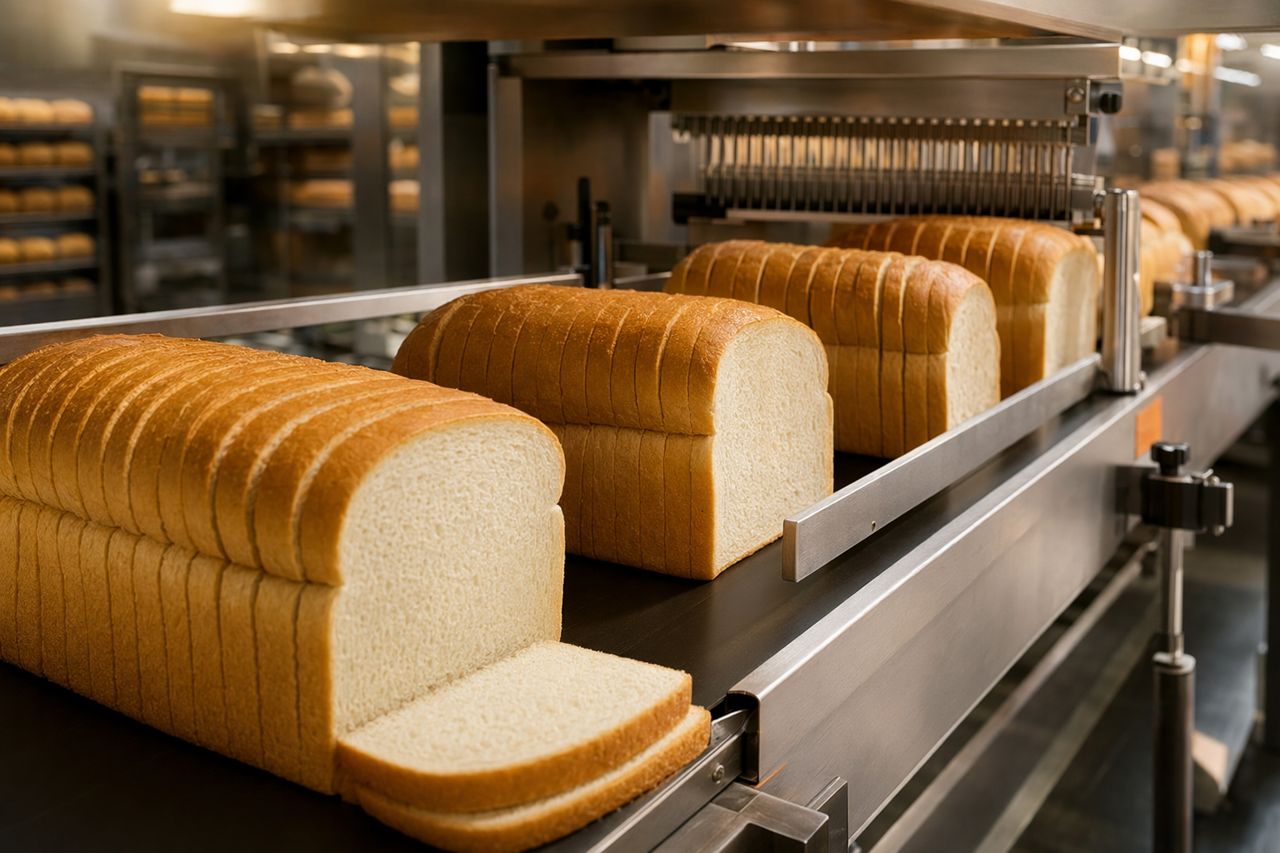
Packaged bread has a narrow sensory promise: every slice should feel soft, flexible, and fresh-tasting from the first retail day through the end of the distribution window. Maltogenic Amylase is selected for bakery teams that need to slow crumb firming, protect slice resilience, and extend perceived freshness in sliced bread, sandwich bread, pan bread, rolls, and other wrapped bakery formats.
This is not a cosmetic ingredient. It is a targeted starch-management tool for industrial bread systems where softness, machinability, shelf-life, and eating quality must hold together at scale.
Maltogenic Amylase Solutions supplies maltogenic amylase wholesale to industrial bread bakeries, improver blenders and the distributors who supply them.
Buying in bulk? Send the product you make, the quantity and the destination country; pricing and pack are quoted per order. Request a quote
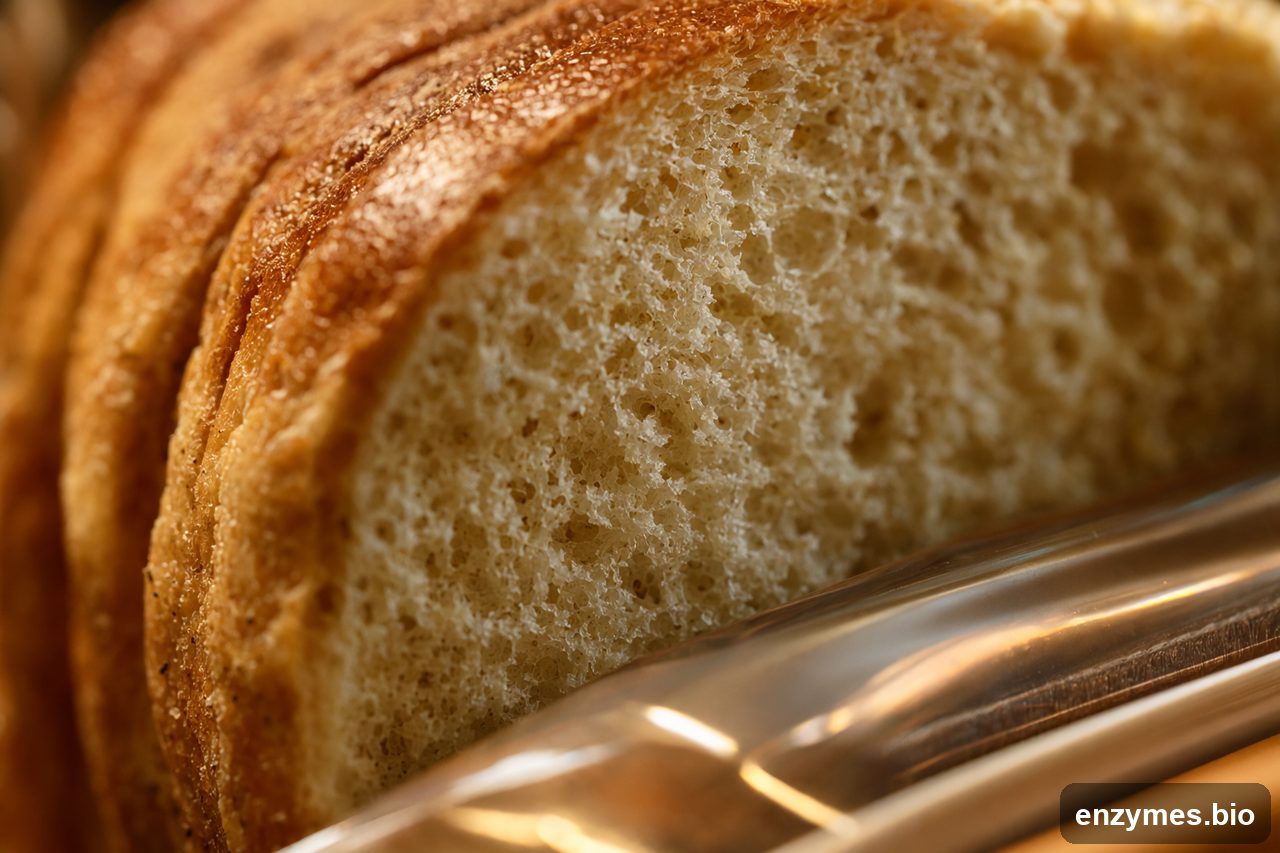
During storage, bread crumb firms as starch structures reorganize and water distribution changes. Maltogenic Amylase helps moderate this process, supporting a softer crumb profile over time without forcing a heavy, wet, or gummy eating texture when correctly formulated.
For packaged bread producers, the practical benefits can include:
Maltogenic Amylase is relevant for bakery platforms where softness is a commercial requirement, not a premium extra.
Maltogenic Amylase performs inside a complete bread system. The final result depends on flour quality, damaged starch level, sugar and fat content, emulsifier selection, dough development, proofing, bake profile, cooling time, slicing conditions, and package design.
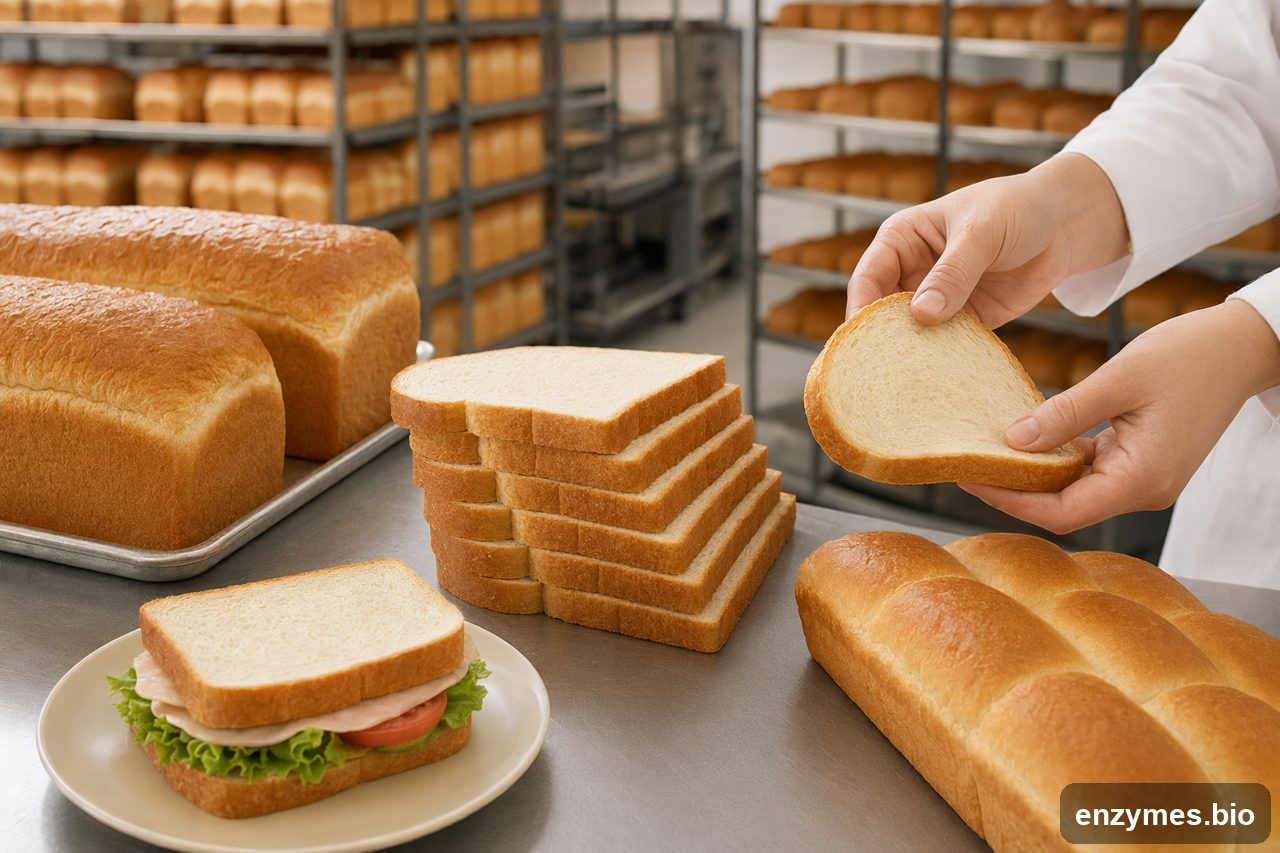
Maltogenic Amylase Solutions supports evaluation around the factors that matter most in production:
For R&D teams, the best evaluation combines instrumented texture work with sensory review. The target is not just a lower firmness reading; it is a bread that still feels like good bread.
Useful trial observations include:
Maltogenic Amylase should be used with precision. Too little may not deliver a meaningful shelf-life effect; too much or poor system fit can shift the crumb toward weakness, tackiness, or an overly soft structure.
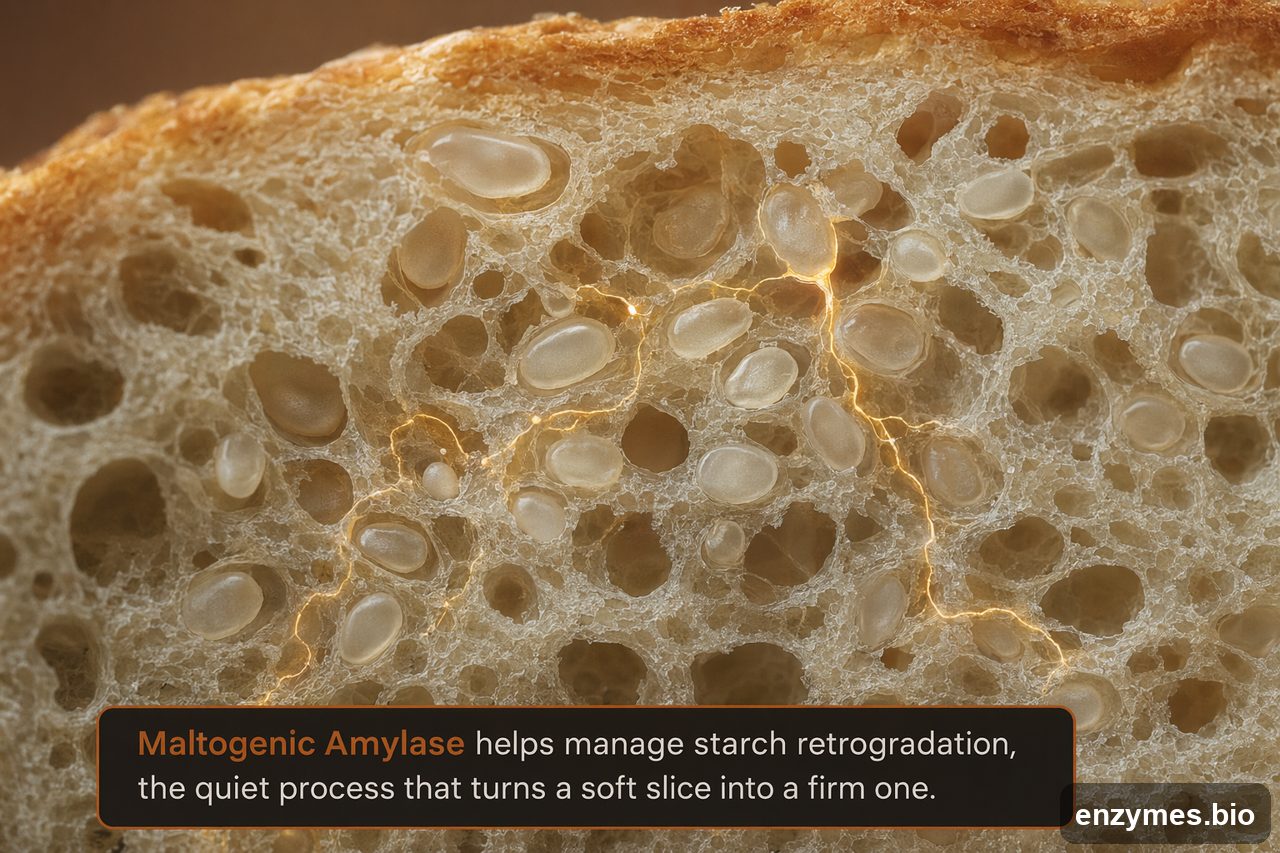
Maltogenic Amylase Solutions helps bakery teams evaluate:
The goal is a stable softness profile that protects the consumer experience without creating processing surprises.
For commercial bakery programs, enzyme selection is both a formulation decision and a supply decision. Settle these points with the quote, not after the first delivery:
Maltogenic Amylase Solutions is focused on one question: how do industrial bakeries keep bread feeling fresh for longer without losing the character of a well-made loaf?
Our work with Maltogenic Amylase is centered on tactile results: a slice that bends cleanly, rebounds gently, spreads without cracking, and still delivers a soft, warm crumb impression after days in the bag.
Tell us the bread format, the shelf-life target, the quantity per order or per month, and the destination country. Use the inquiry form on this page. Pricing, pack format and lead time are quoted per order. Request a quote

Tell us your application and volume — we reply with pricing and lead time.
We have received your message. We will reply by email.