What importers, distributors, improver blenders and bakeries should check before buying maltogenic amylase in bulk: documents, pack label, processing-aid status, import and lot records.
Maltogenic amylase is bought for a sensory result: softer crumb and longer eating quality. Whether a quoted grade can actually be bought, imported, used and declared is decided by compliance work, and that work is cheapest when it starts before the first order rather than after the first container.
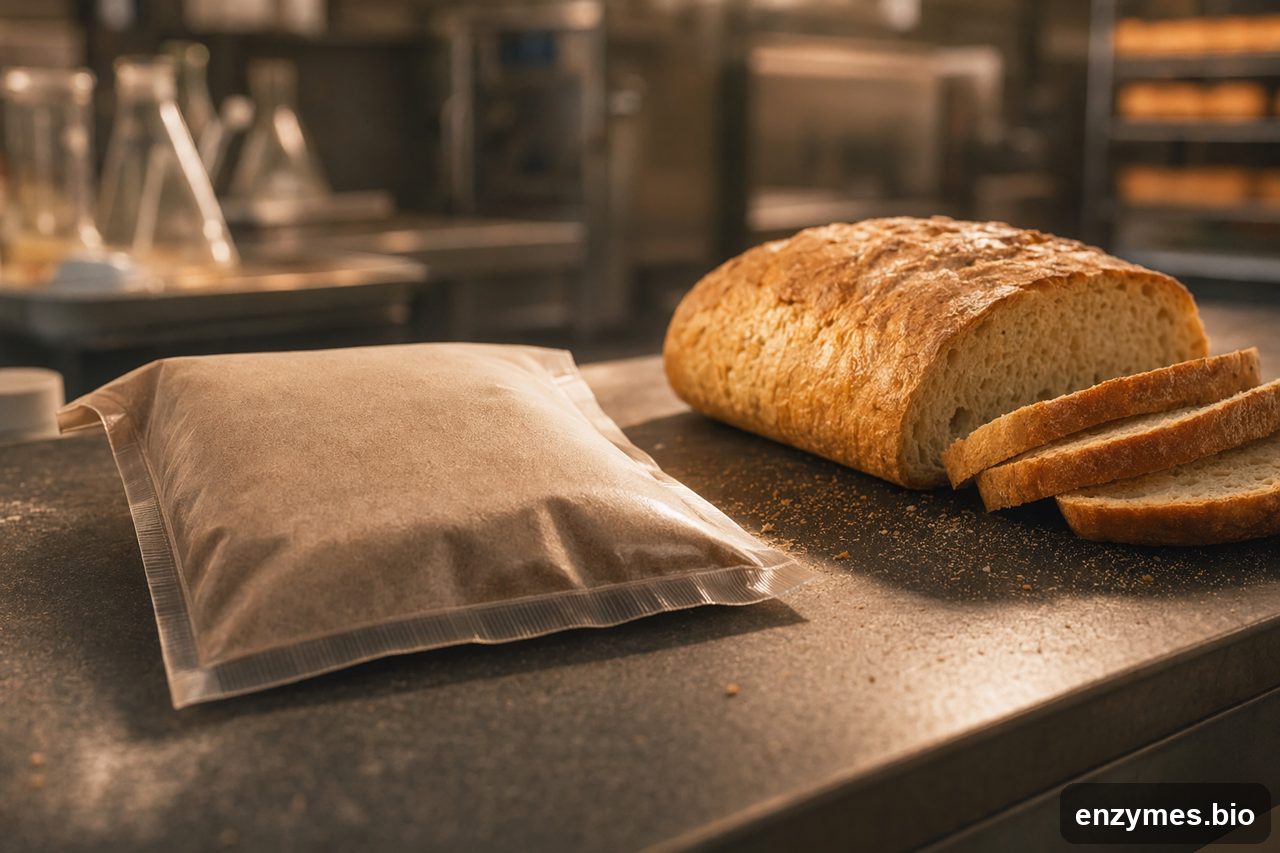
This page is for importers, ingredient distributors, improver and premix blenders, and bakery manufacturers buying maltogenic amylase in bulk. It sets out what to check, in the order a purchase usually needs it.
Buying in bulk? Send the product you make, the quantity, the destination country and the documents your market requires; pricing and pack are quoted per order. Request a quote
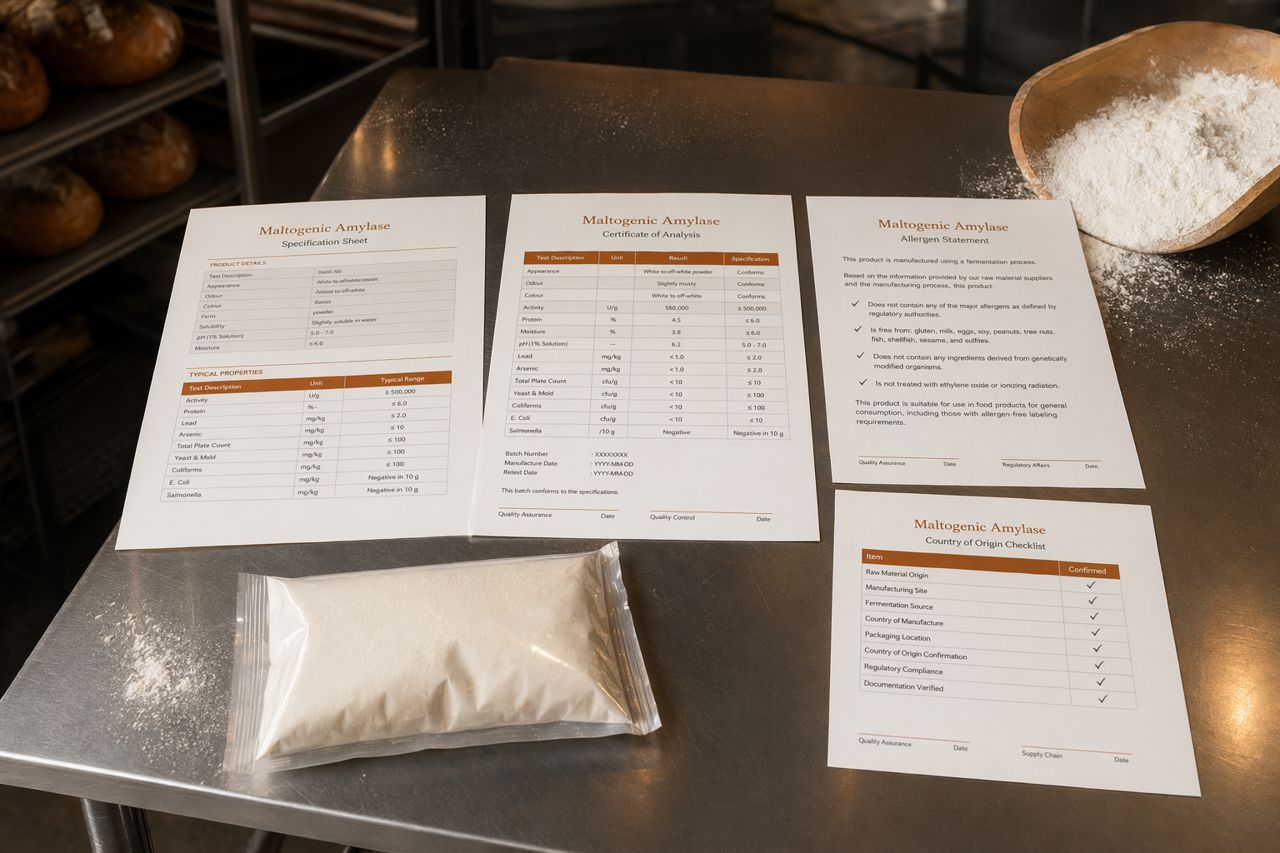
Food enzyme compliance is specific to the destination country and to your customer. Ask for the document set together with the price, so that regulatory review runs in parallel with commercial review. A typical request list for maltogenic amylase:
What a supplier can provide varies by grade and market. Agree the list before the trial, not before the launch.
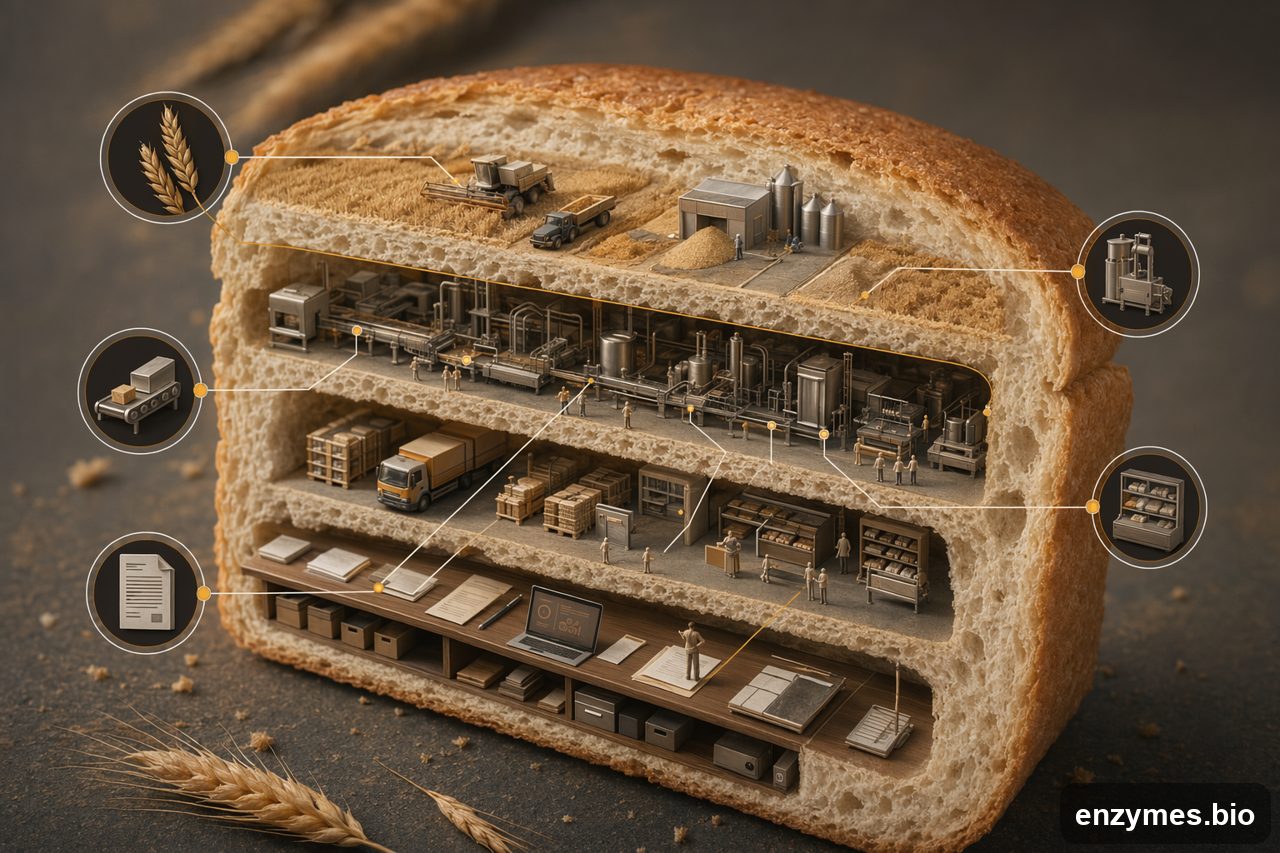
A bakery-grade maltogenic amylase in a 1 kg pack typically carries on its label the net content, the producer's food production licence number, the shelf life, and a storage instruction: as a biologically active product it is to be kept cool and dry.
Check that the label and the specification of the grade you buy agree on shelf life. For a bakery grade it typically lies between 12 and 18 months. For stock rotation and for the shelf-life remaining on arrival, plan on the shorter figure and ask which one is guaranteed for your lots.
Maltogenic amylase acts during dough processing, baking and crumb ageing, so in many bakery systems it is reviewed as a processing aid. Customer policy or local rules can treat it differently. The classification affects:
There is no single label wording that works in every market. The decision depends on jurisdiction, product category, the enzyme's role, carryover, and retailer or brand-owner standards. Confirm the position for each destination before scale-up, especially for products sold in several regions.
Commercial enzyme preparations are not pure enzyme. Carriers and standardising materials keep them free-flowing, dispersible and stable in storage, and they matter for allergen review, label review and import paperwork. Confirm:
For commercial supply, every lot should be traceable to the specification it was released against. Confirm:
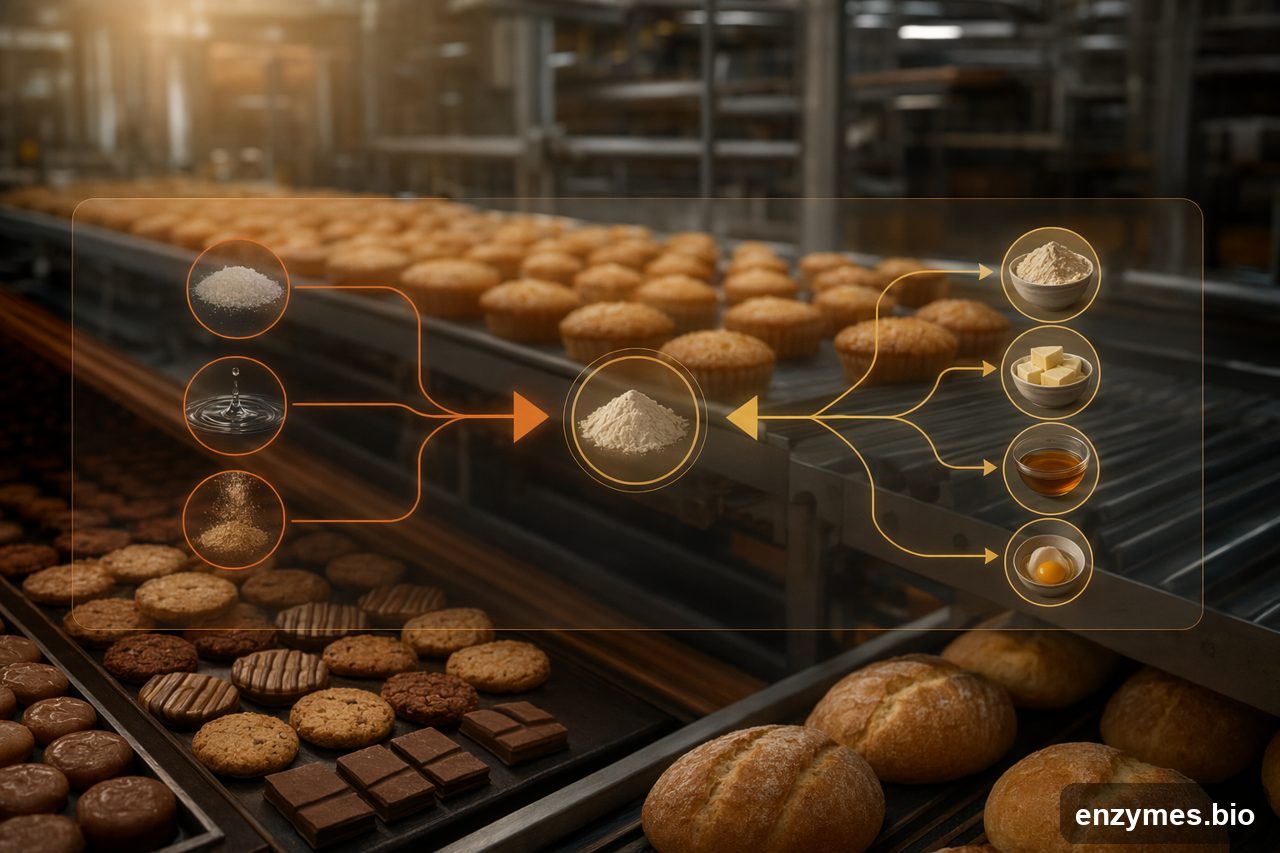
Cross-border purchase adds requirements beyond ingredient approval: customs classification, country of origin, manufacturing location, product description and intended use. Depending on the destination you may also need food enzyme authorisation status, production organism review, local processing-aid rules, documents in the local language, and answers to customer questionnaires.
Distributors and bakery groups selling into several countries should build a compliance matrix before ordering: each destination, product category, customer account and required document. A grade accepted in one channel can otherwise be blocked in another.
Technical performance is not the same as a finished-product claim. Before using wording such as "stays fresh longer" or "reduced staling", check whether the claim is technical or consumer-facing, whether the finished product has shelf-life data behind it, whether the enzyme must be declared on pack, and whether customer or retailer standards restrict enzyme claims. The strongest position comes from documented trials: same formula, defined storage conditions, sensory review, and a clear comparison with the current standard.
To get a quote that is useful for compliance as well as price, include:
Maltogenic Amylase Solutions supplies maltogenic amylase wholesale to bakery manufacturers, improver and premix blenders, importers and ingredient distributors. Use the inquiry form on this page. Pricing, pack format and lead time are quoted per order. Request a quote
Tell us your application and volume — we reply with pricing and lead time.
We have received your message. We will reply by email.